How We Connect
This project was motivated by the conversations and discussions during the residency about the present social climate and movements in this country. It also is a response to the challenges of the global pandemic, especially how it has changed patterns of interpersonal relationships.
I have been working on “How We Connect” since the residency in summer 2020. However, the initial idea for this project was already born several years before when I had found a large handmade wooden salad bowl in a thrift store.
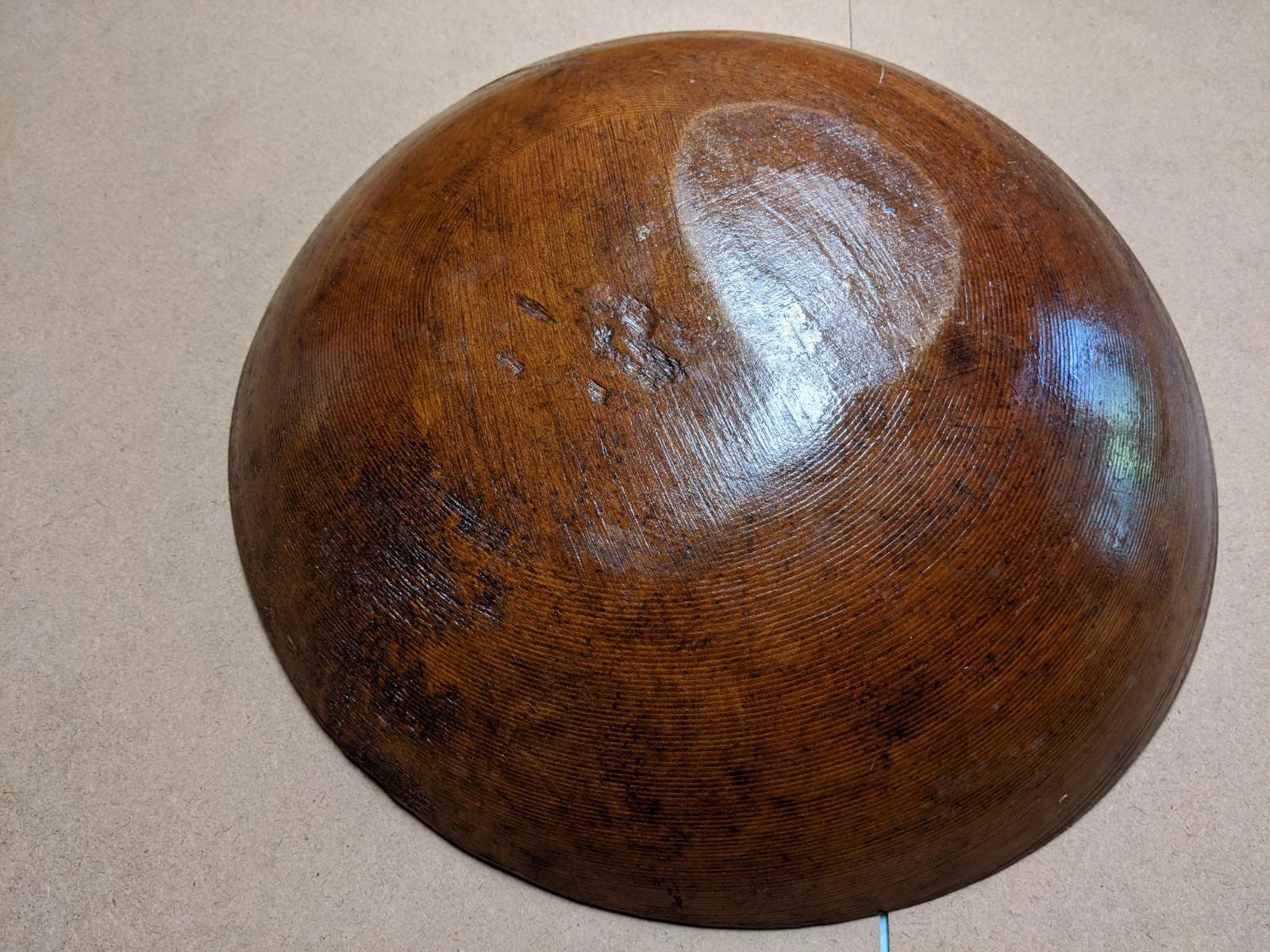
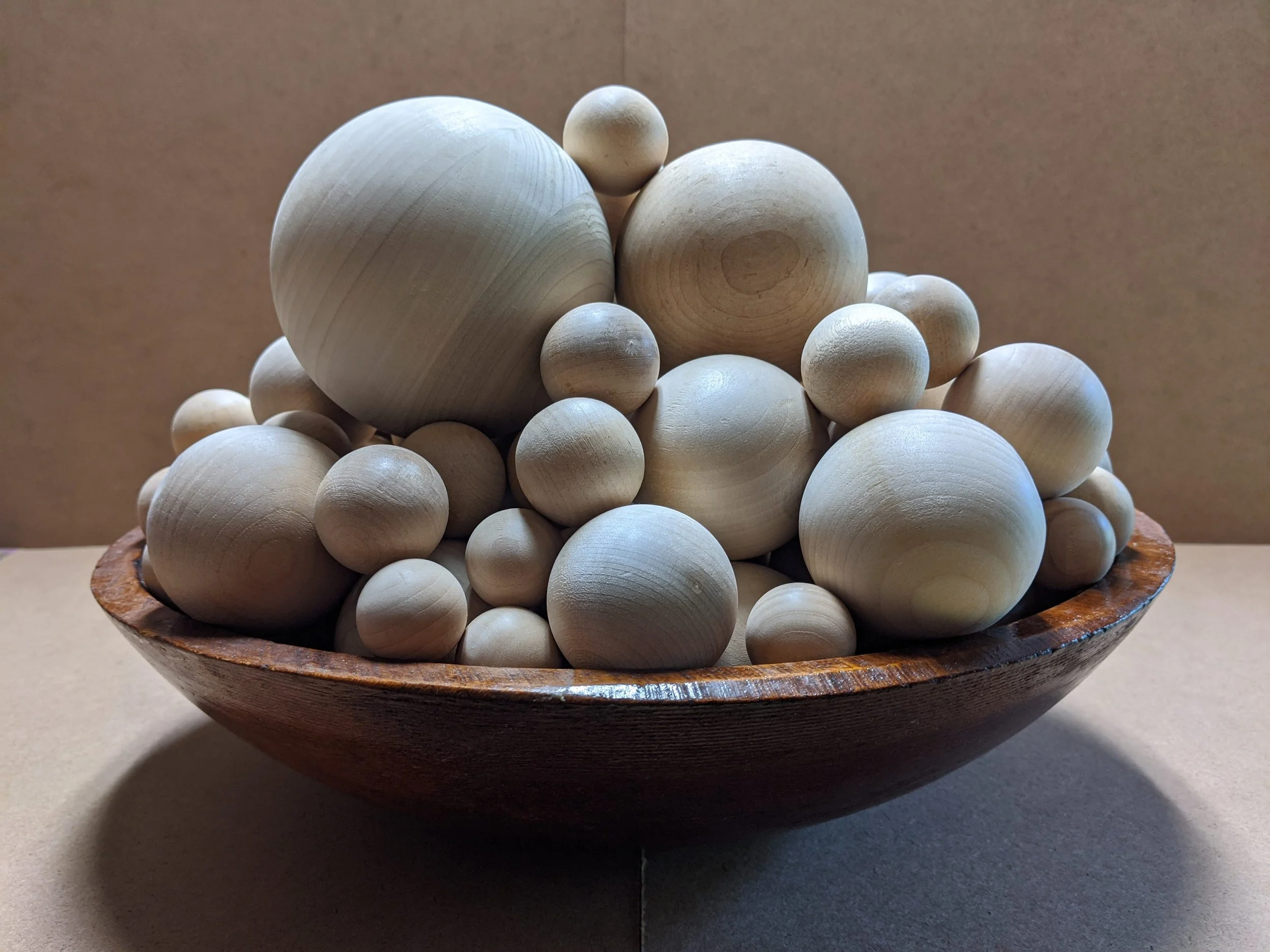
This bowl was characterized by lots of imperfections, including a large crack on the side that had been fixed with glue (didn’t work), an uneven bottom, and many small cracks, chips, scratches, and stains at the rim and on the inside.
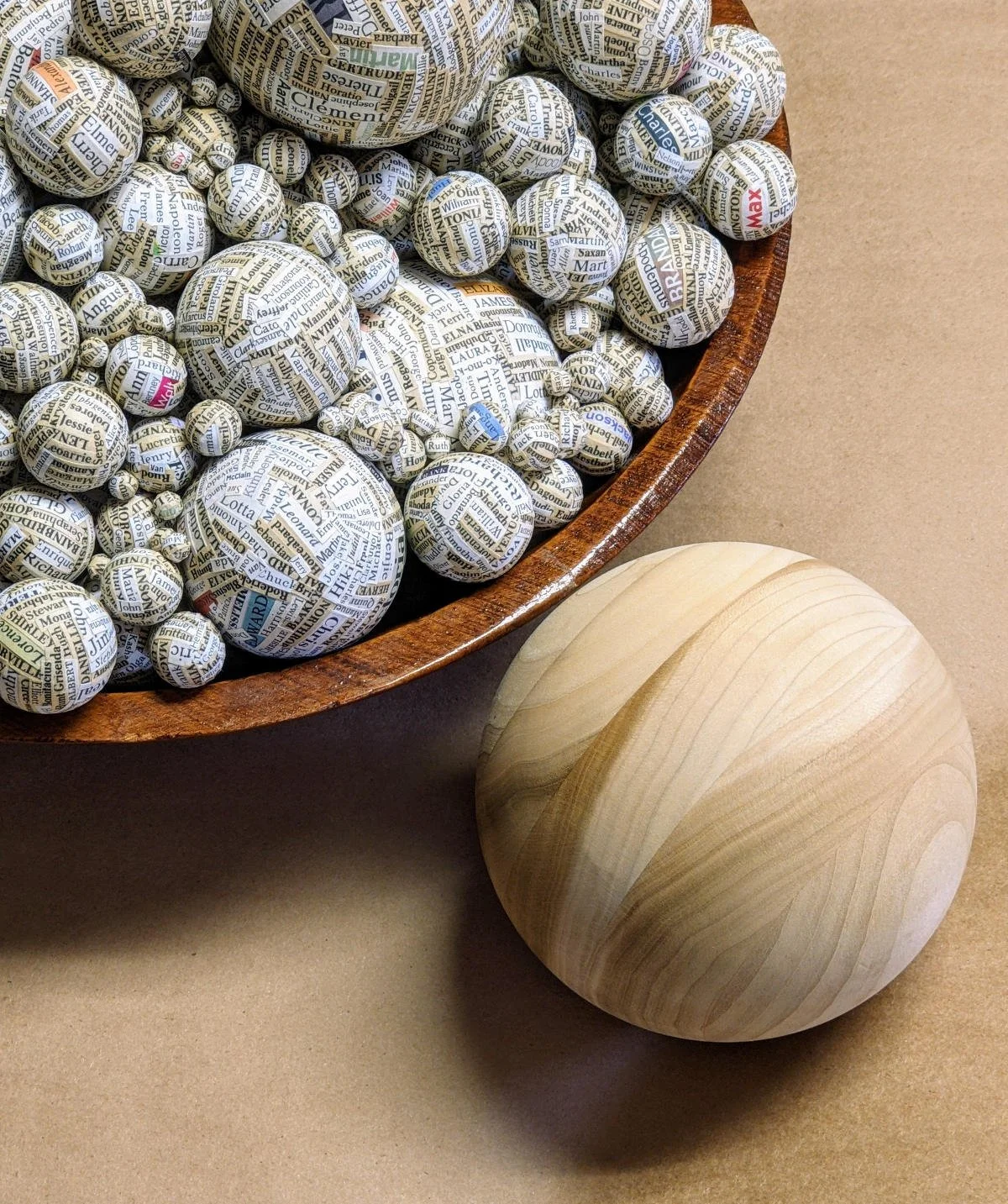
To me, this bowl was a visual metaphor for the framework of a society created by laws, rules, morals, habits, common sense and other expressions of power that define social stratification, and I wanted to fill this bowl with groups of people to conjure up the possibilities and limitations of social and systemic movements within this framework.
This interactive 3-D object is about the way how people connect in general. It is about the social groups they form, the ways of how these groups interact with and depend on each other, and about the dynamics of these groups within a changing society.
It is an interactive sculpture about how we are functioning (or not) as a society.
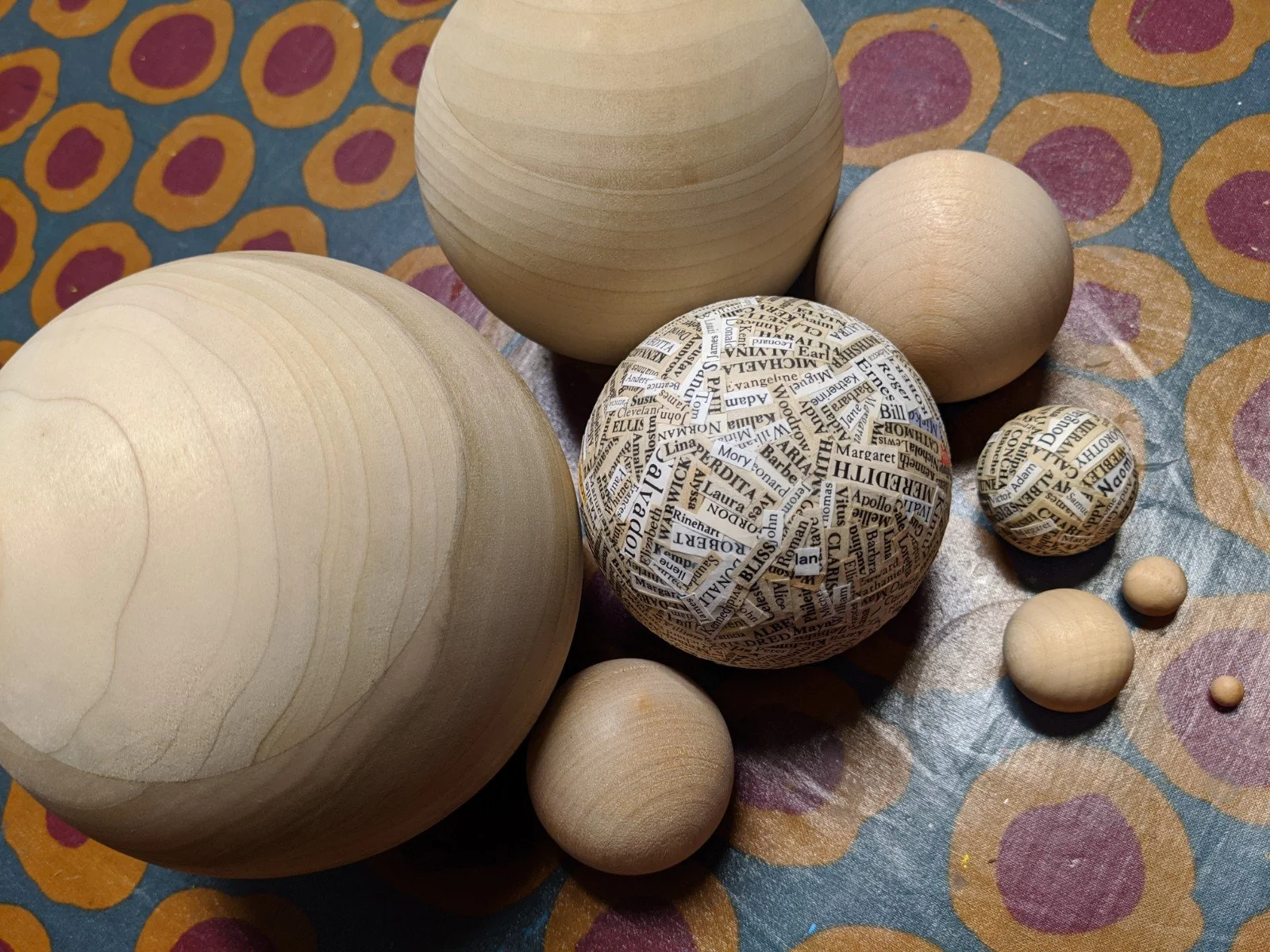
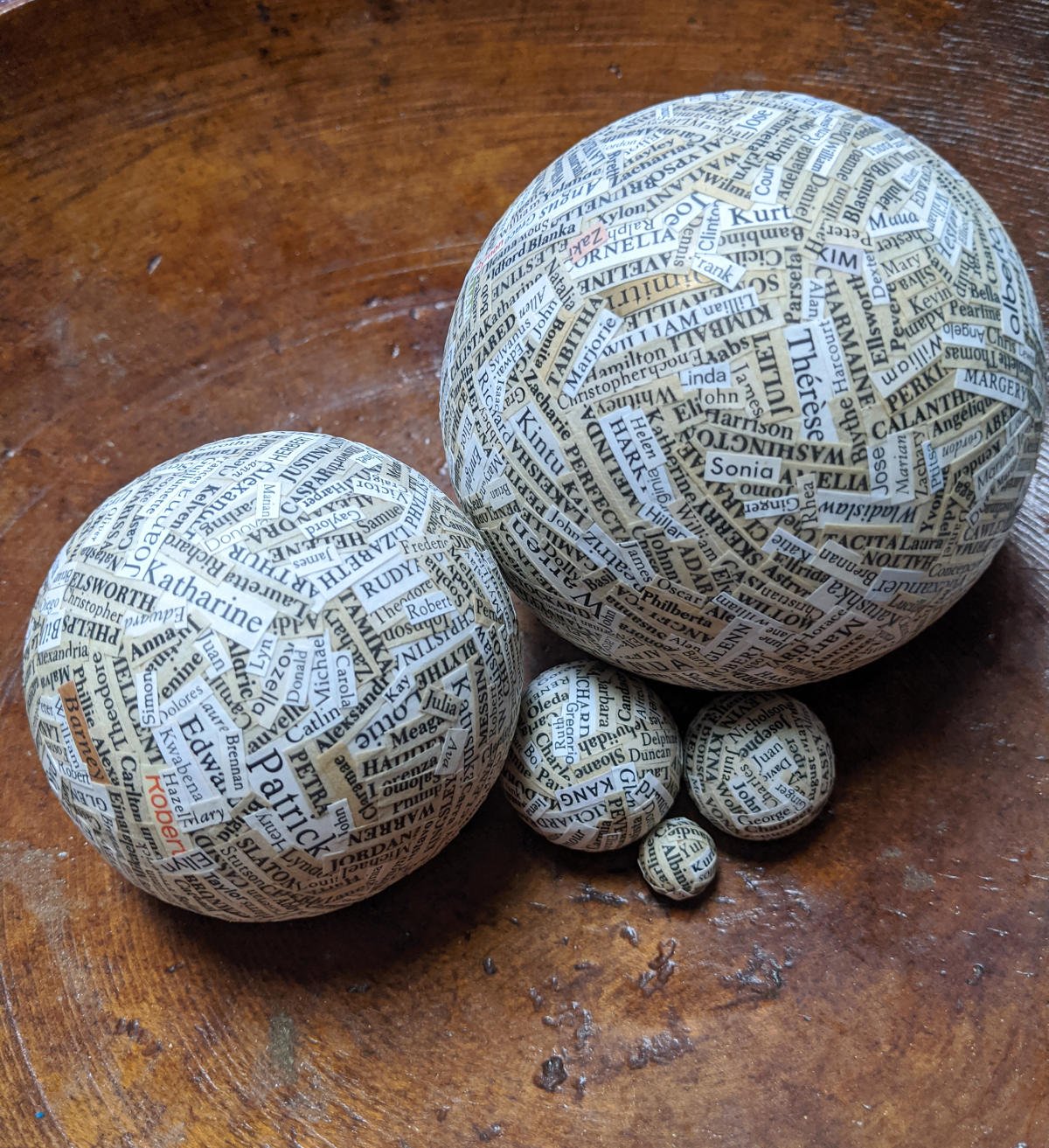
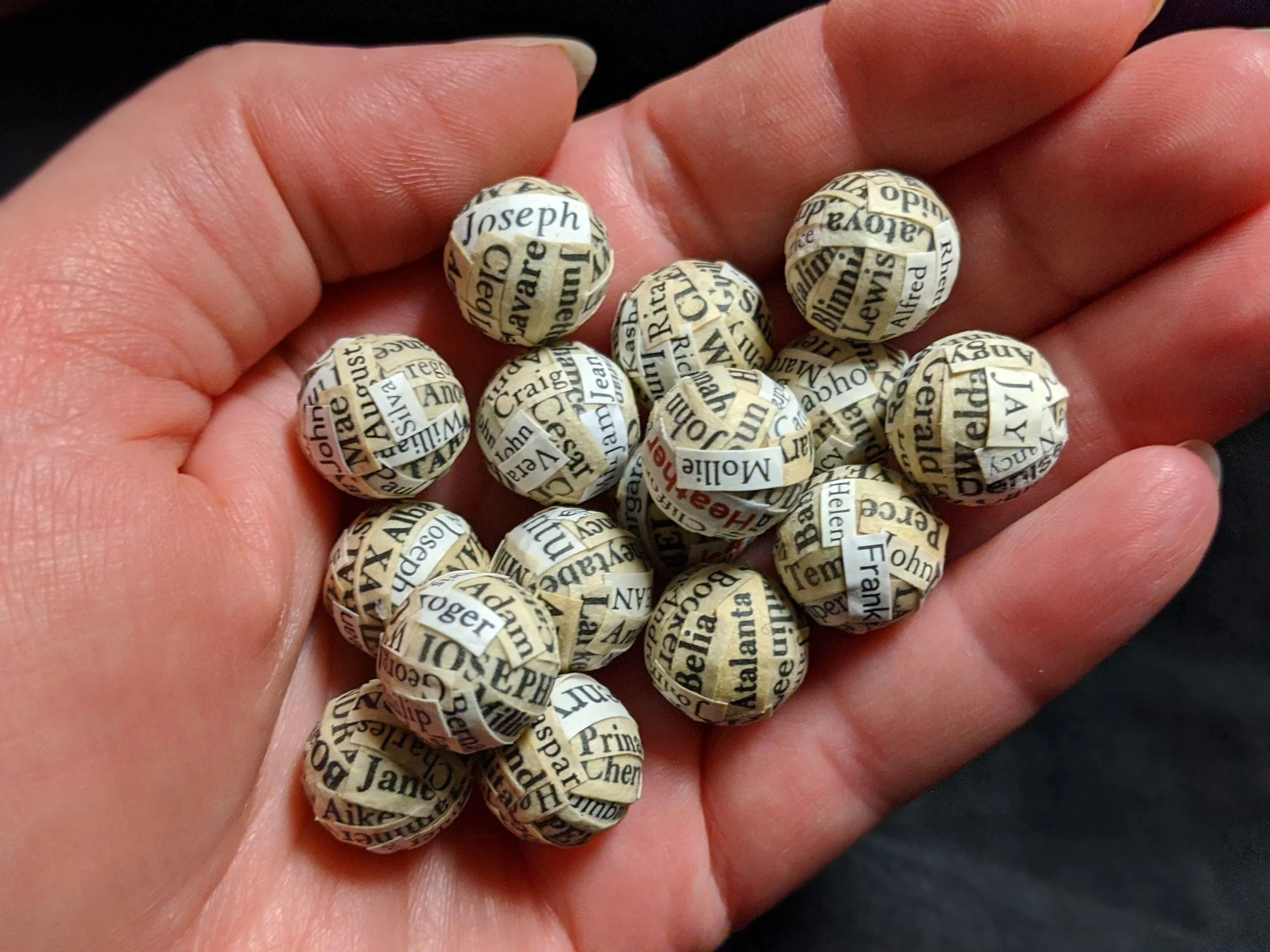
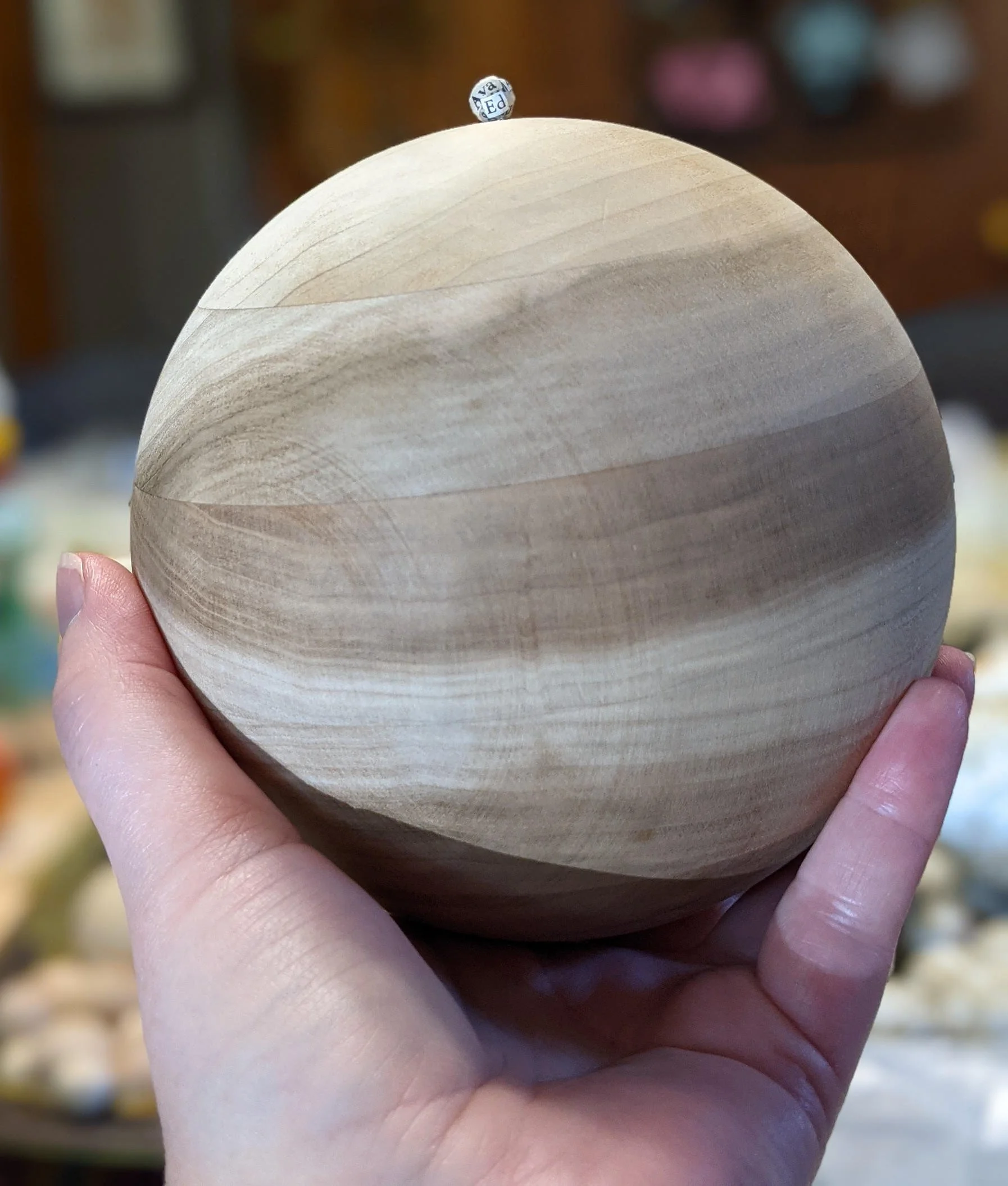
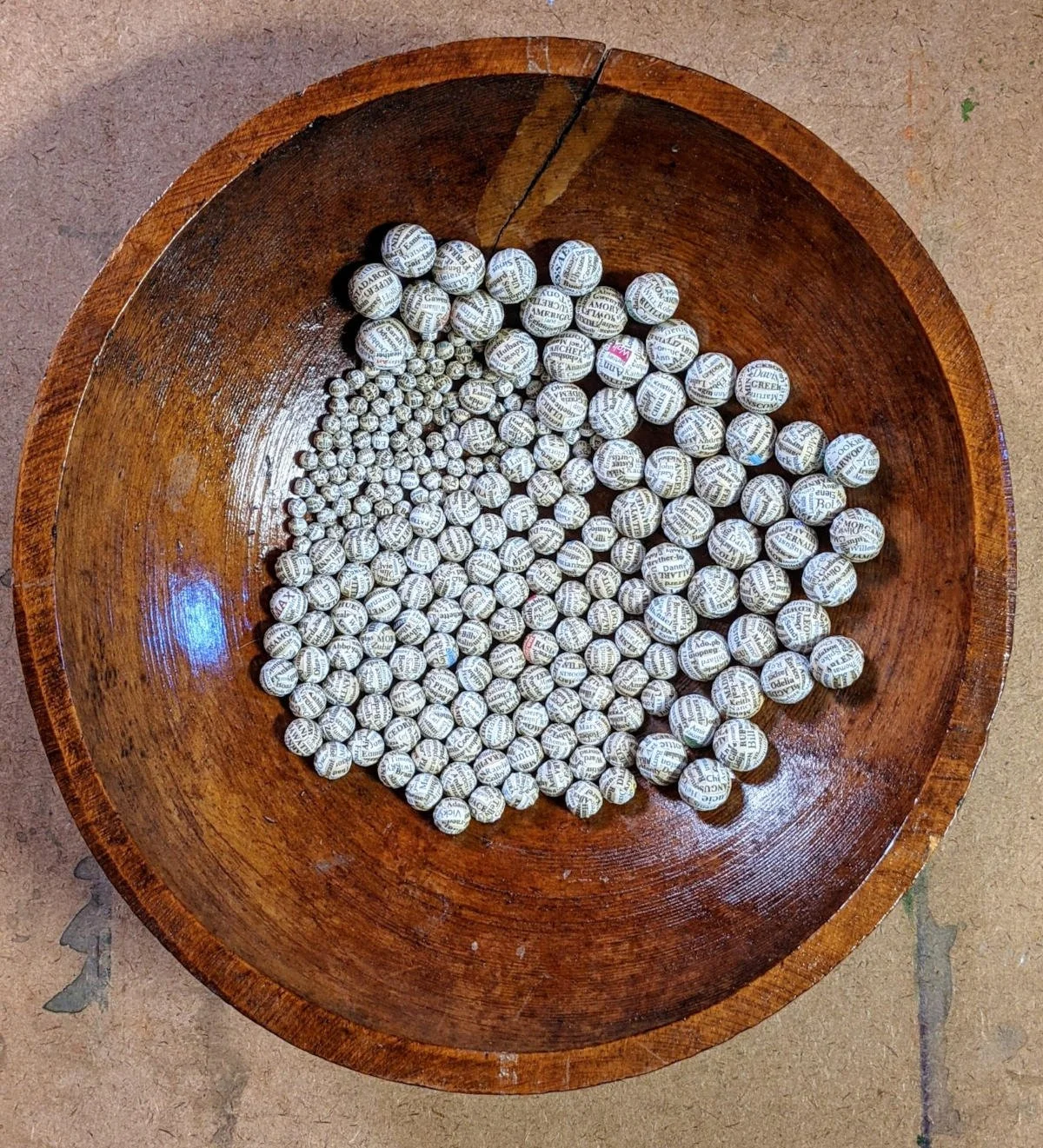
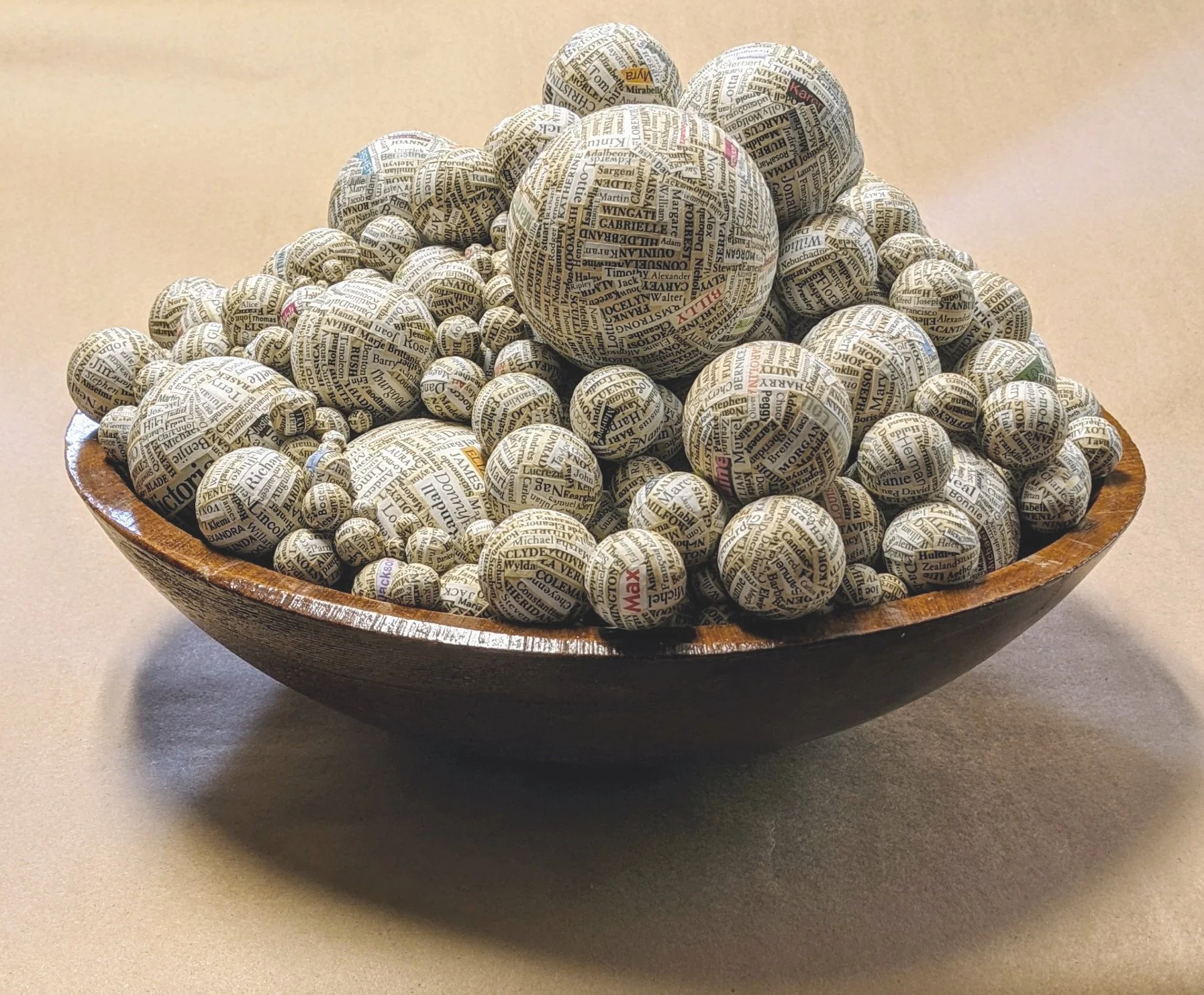
The social groups – families, circles of friends, clubs, companies, schools, organizations – are represented by 353 wooden spheres with different diameters from 1⁄4“ to 5”. I have found that the maximum number of spheres that can be contained by the bowl is about 350 but they will only fit when placed with care and balance. Then I added three tiny spheres to get to the next prime number, 353, because I wanted to incorporate the wholesome thought that a population should not be divided.
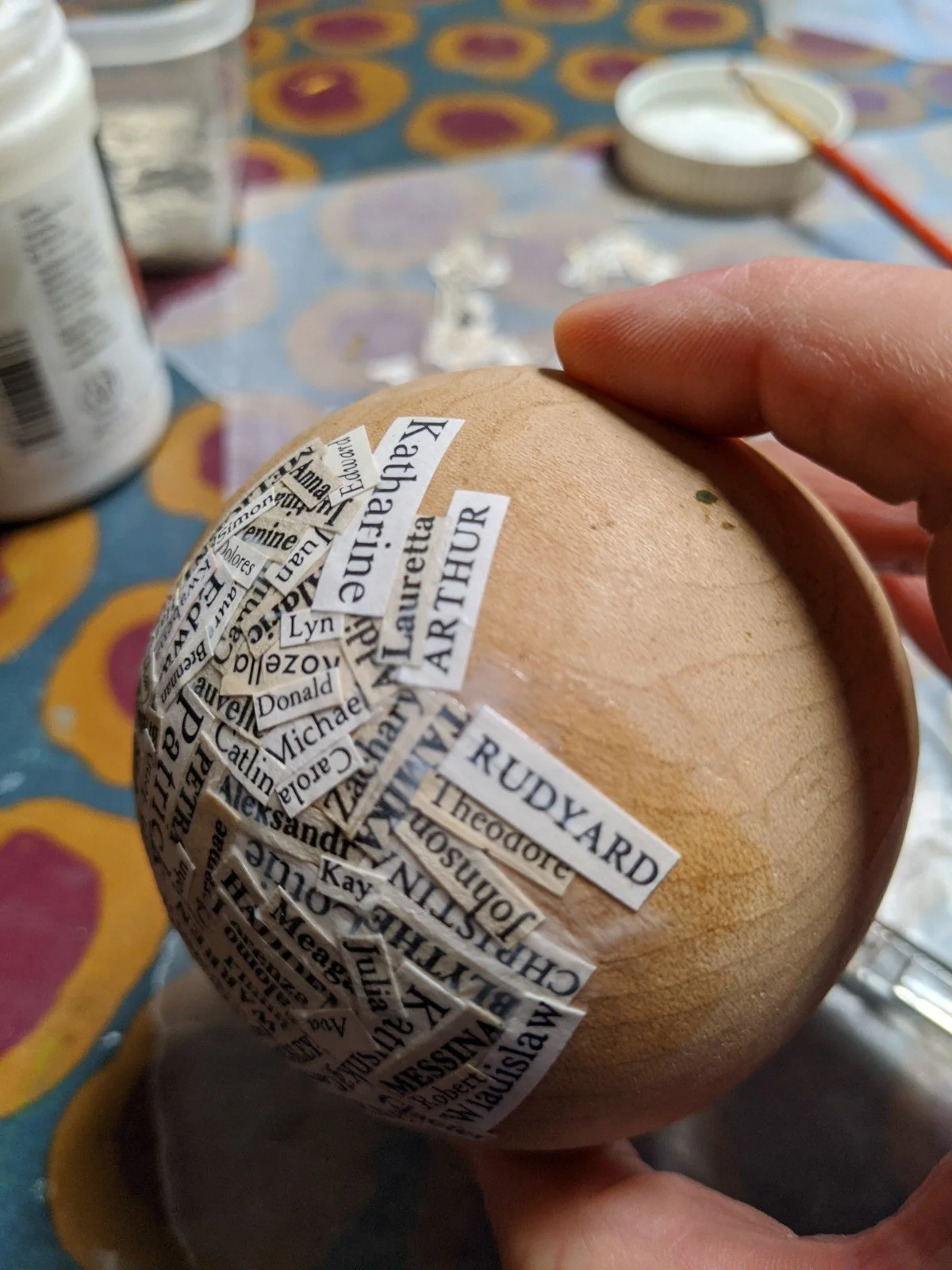
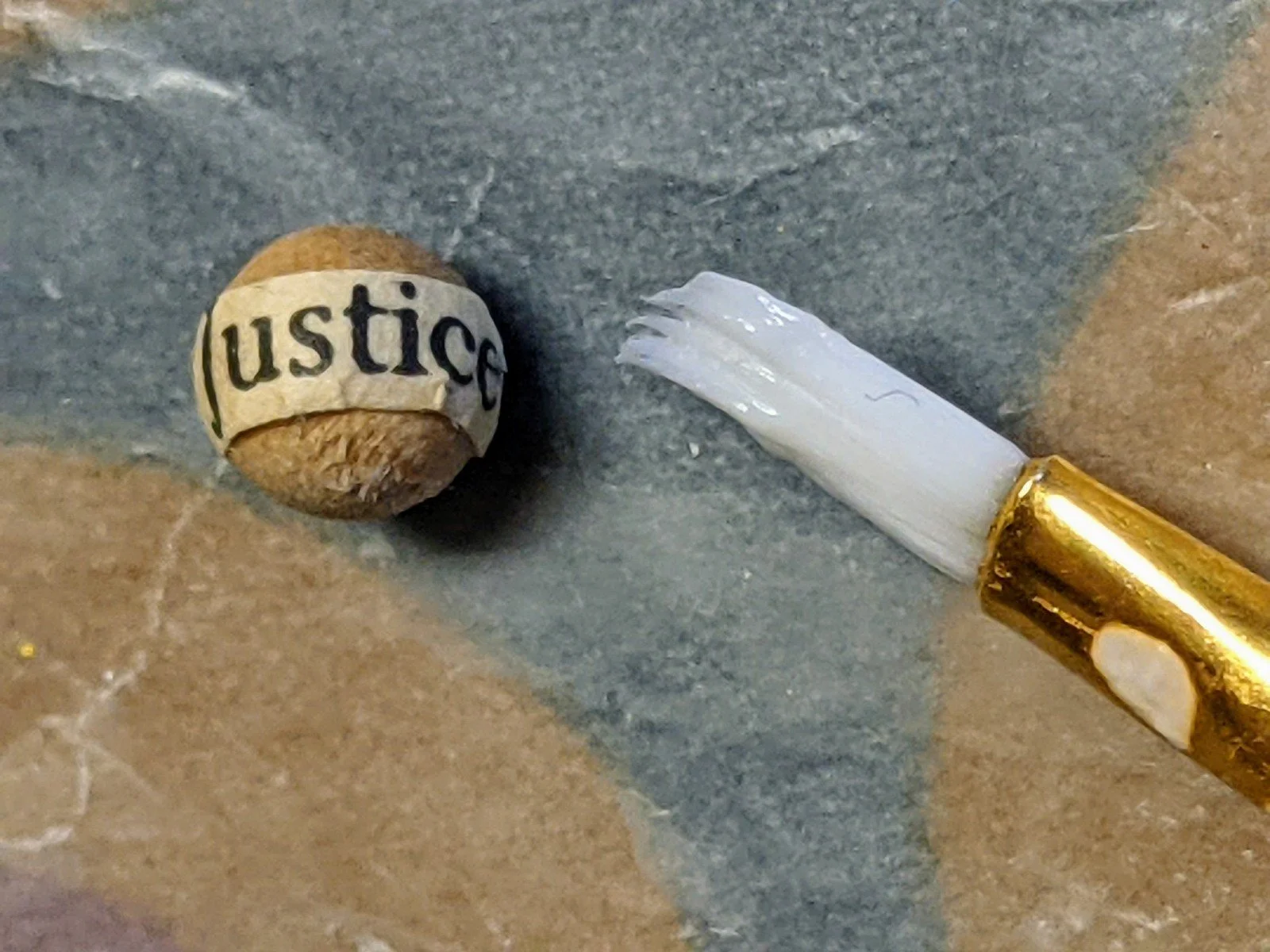
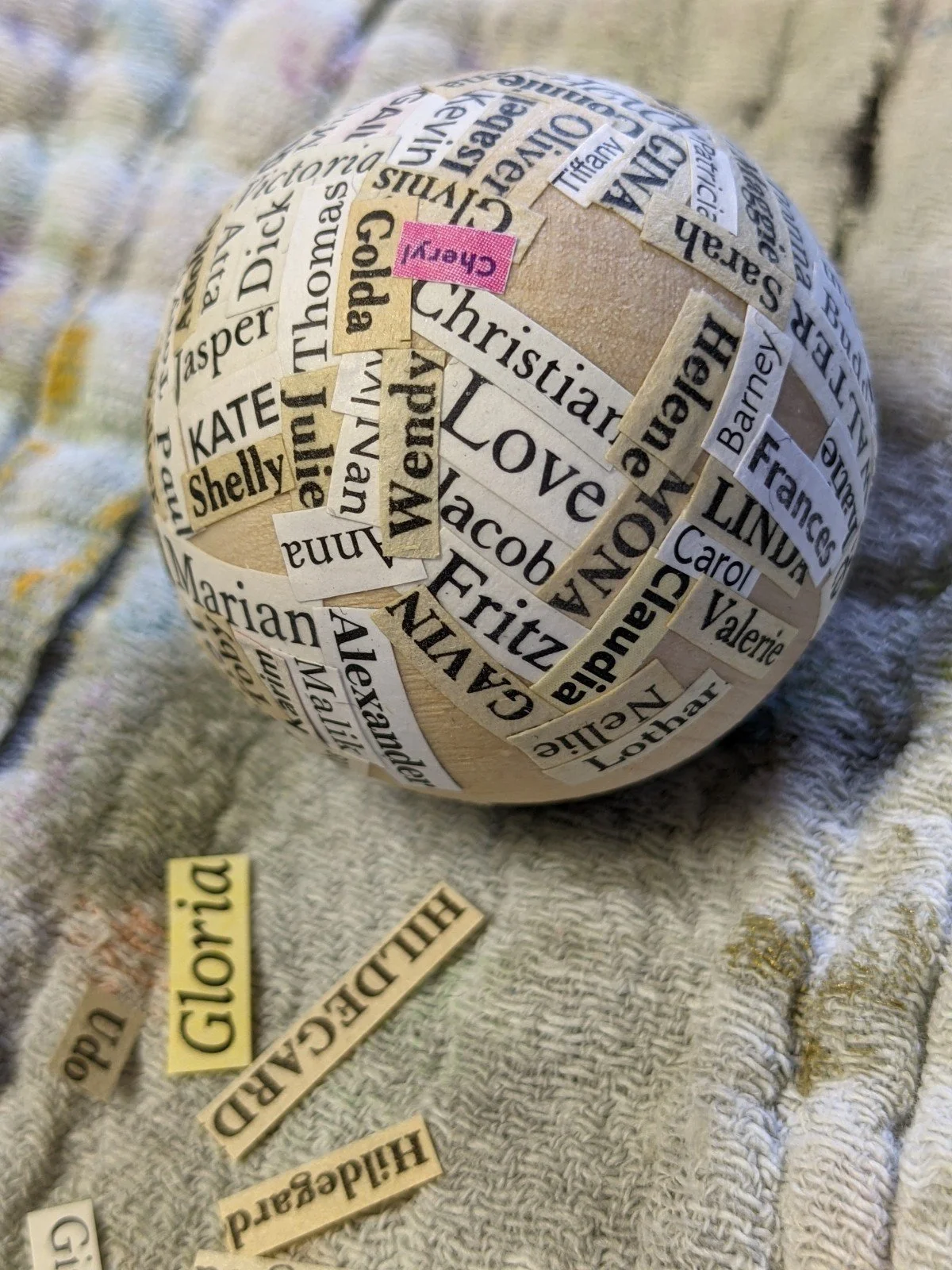
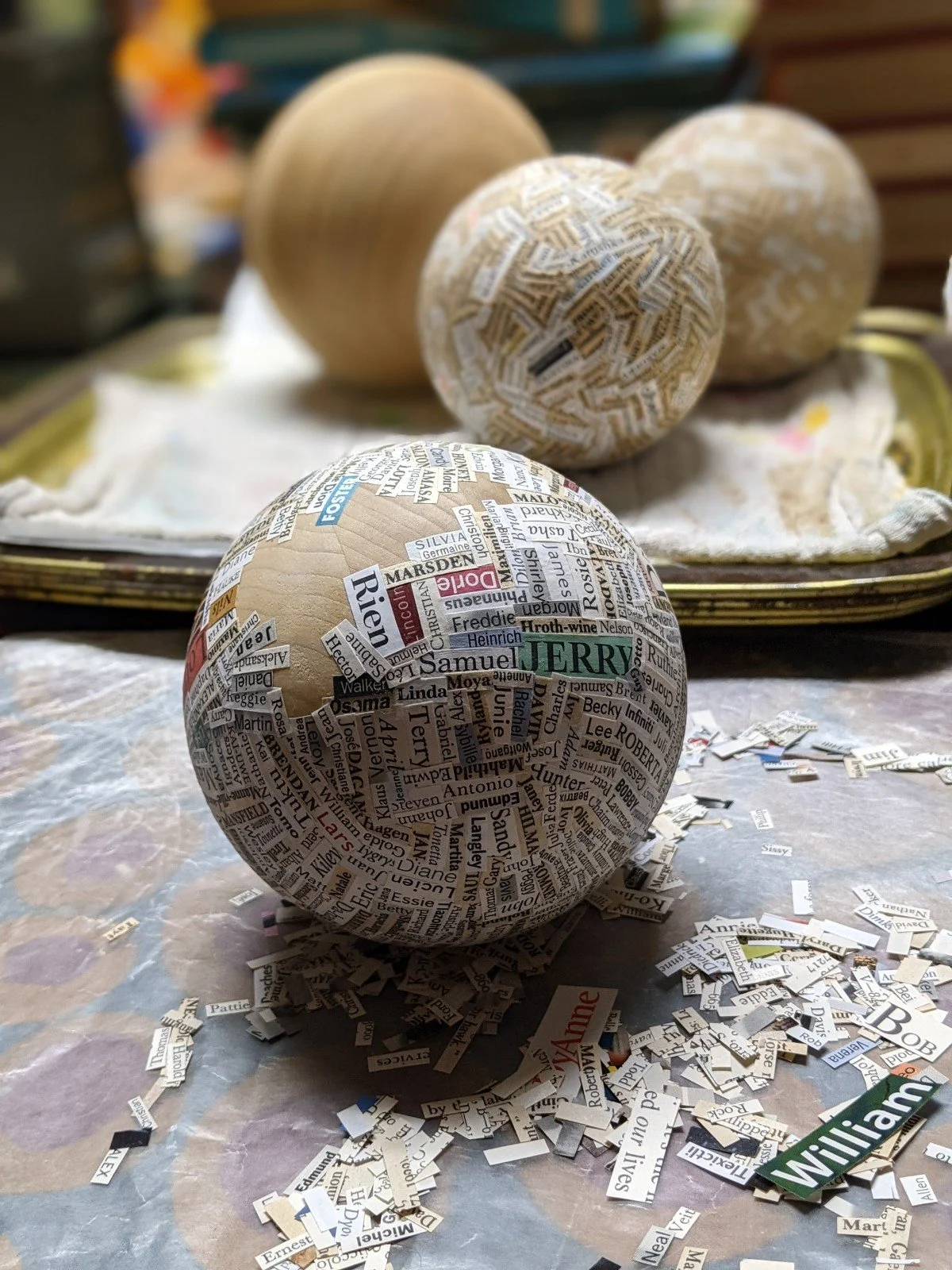
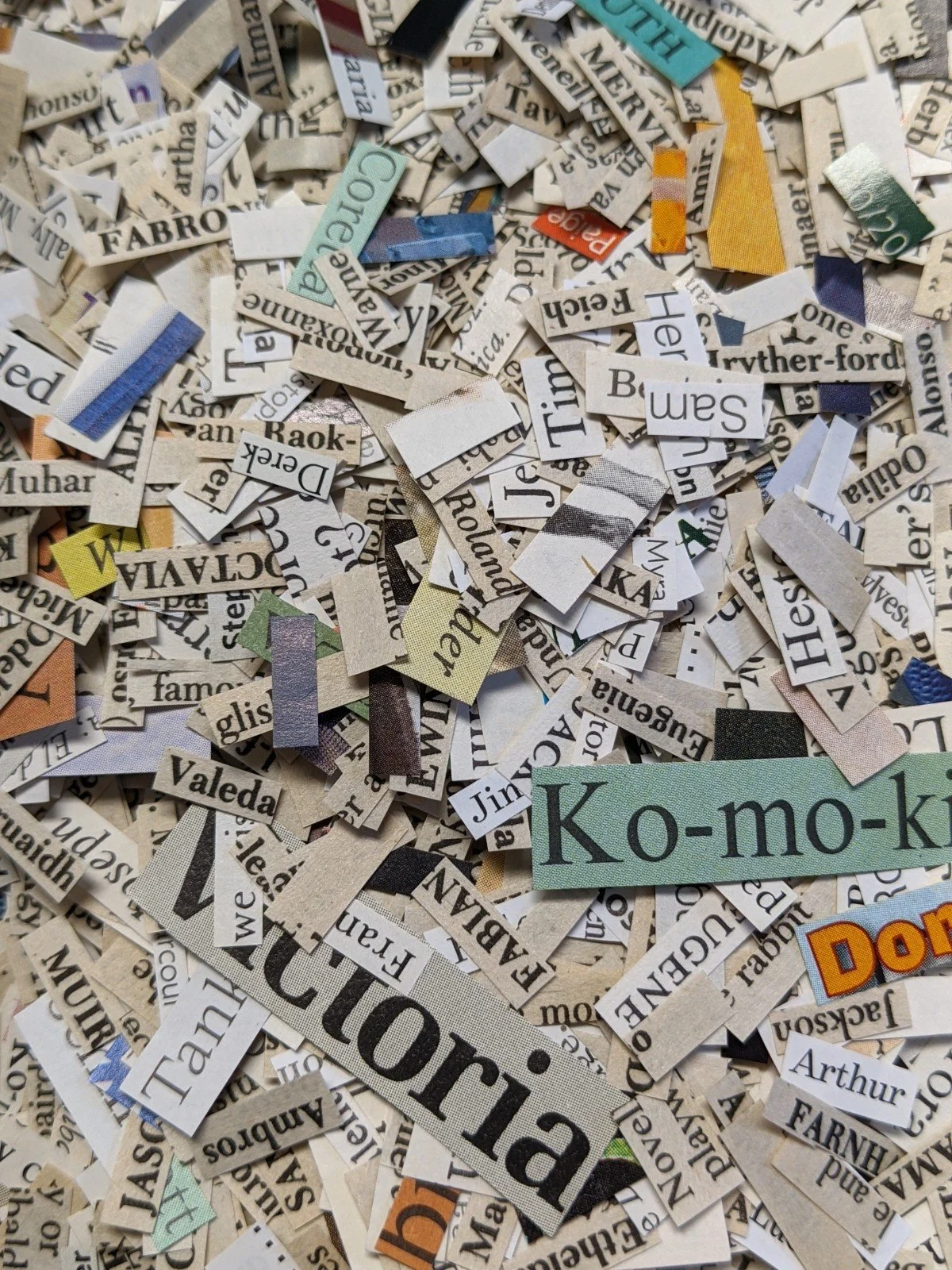
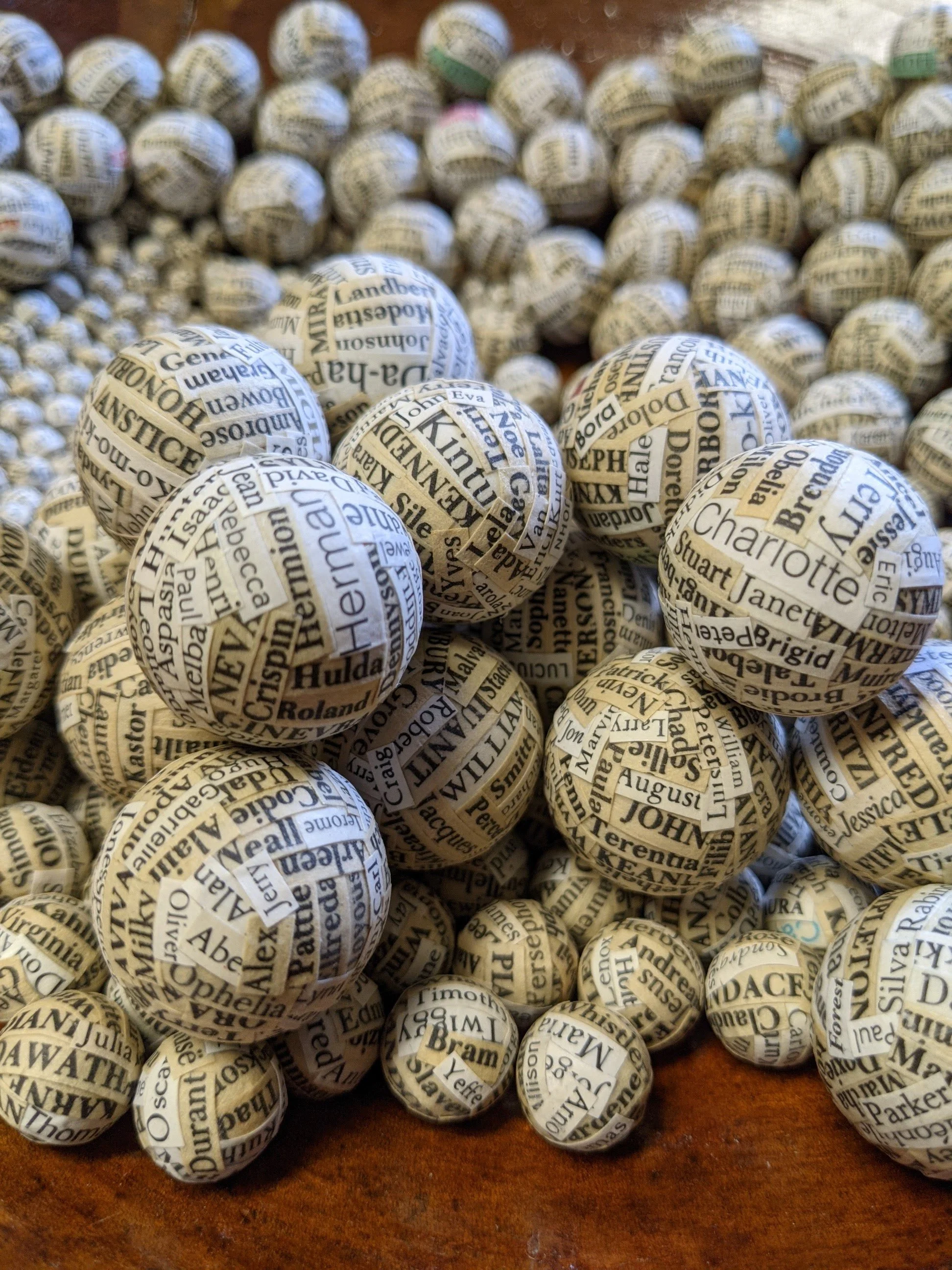
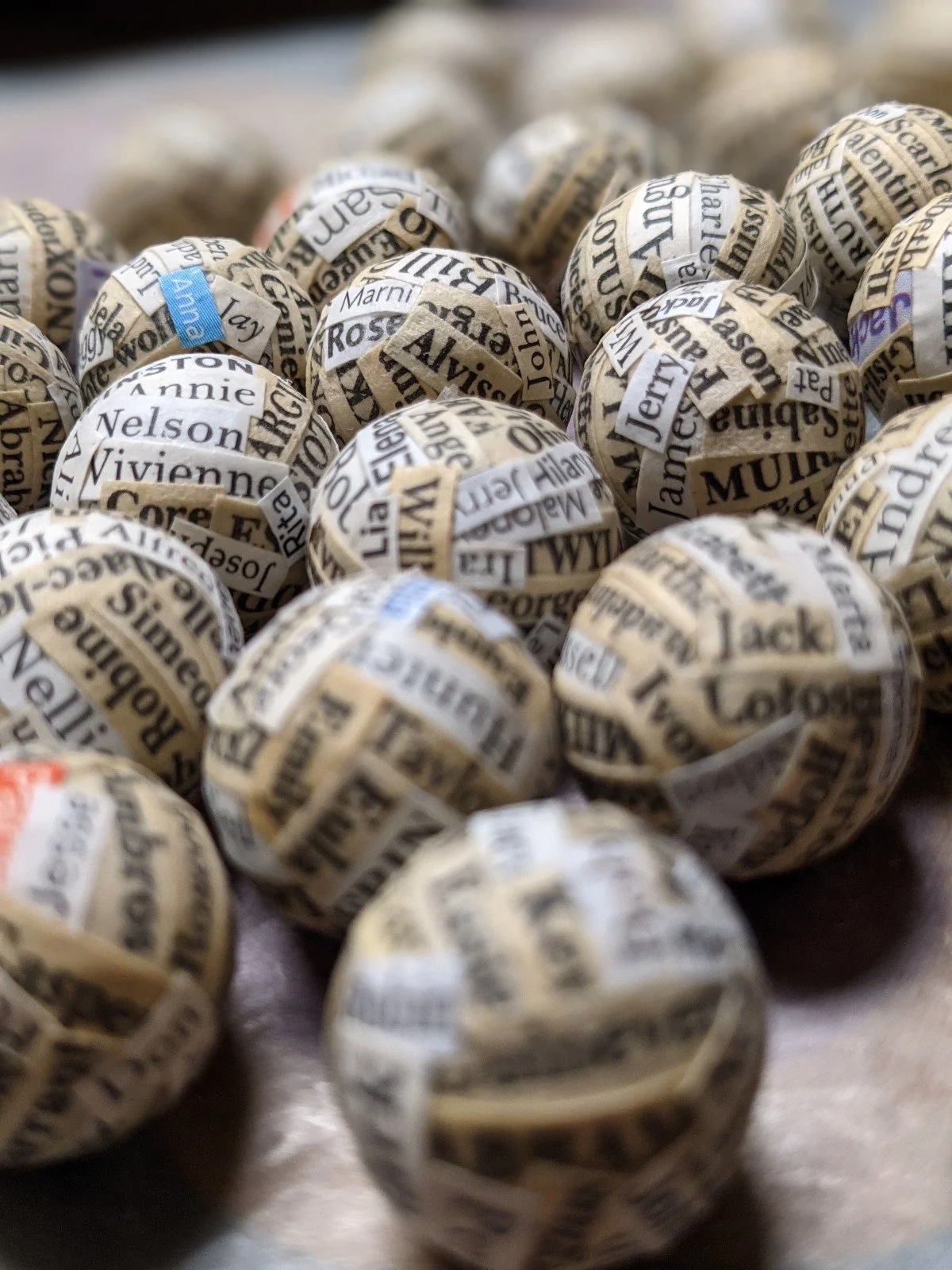
For individuals, I have covered the spheres with first names clipped from a multitude of old and new paper sources. I have cut and pasted about 24,000 names from different pasts and different cultures, including forgotten and reintroduced names, names of unknown ancestors, of legends, fictional characters, and historic figures, names that point to a certain origin and social status. Doubles and multiples of names can mean that a person is part of several groups. Sizes, typefaces, fonts, and colors of the names as well as the quality of paper and ink vary to suggest a certain position of an individual within a certain group.
In the bowl, the different-size spheres exist alongside each other, making contact with each other without making permanent connections. The smaller spheres are in contact with only a few other spheres, while the larger spheres are in contact with a larger number of spheres. Some spheres are on top, some in the middle, some at the bottom. Some are at the margin, some are nestled in niches, some are hidden, some are exposed. Some are so small that they fell through the gaps to the bottom right away and became invisible. Some spheres seem to be immobile as they are surrounded by a number of other spheres, others sit on top supported by the spheres underneath.
The bowl is very full, the spheres piled up high, so that it is difficult to stir in it. Some spheres will fall out when you do it anyway and then need to be returned to a new spot. When a sphere is taken out, the ones left in the bowl will be moving closer to each other; the effect is more significant the larger the sphere is and the closer it is to the middle. When a small one is removed, the impact on the whole is quite insignificant.
In all cases, the connections between the spheres are scant, unstable, temporary. In addition, the wobbly bottom of the bowl challenges the balance of the whole system. Altogether it is a fragile construction.
“How We Connect”
Mixed media: wooden spheres, clippings from various paper sources, found wooden bowl.
2020-21